Construction Will Hold Steady in 2019, Says Dodge

Article written by Alisa Zevin and appears on enr.com
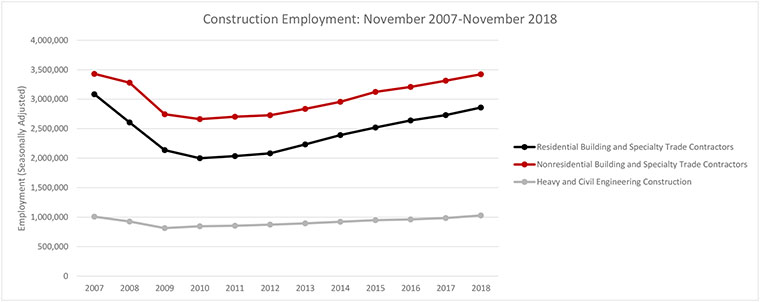
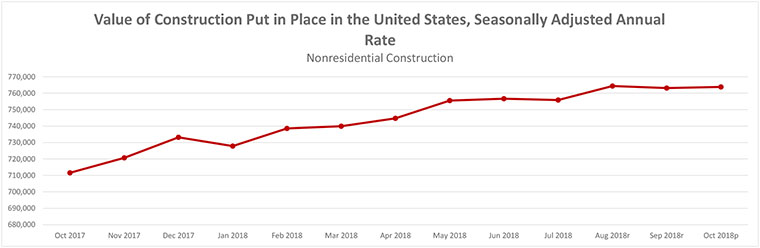
U.S. construction starts will hold steady in 2019 after a modest 3% uptick in 2018, according to the 2019 Dodge Construction Outlook. Starts are expected to hit $808.3 billion, only 0.2% higher than 2018’s $806.8 billion.
“Over the past three years, the expansion for the U.S. construction industry has shown deceleration in its rate of growth, a pattern that typically takes place as an expansion matures,” says Robert A. Murray, chief economist at Dodge Data & Analytics.
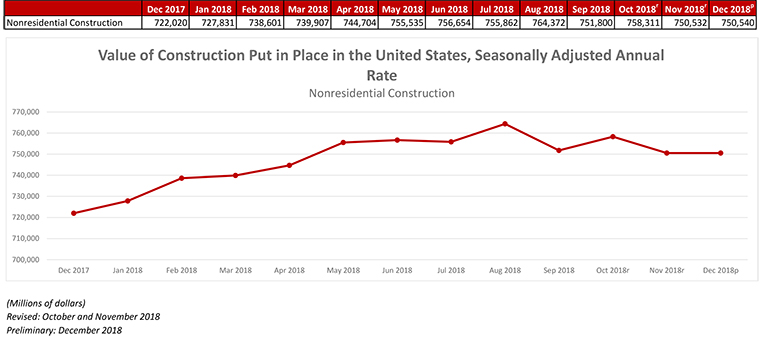
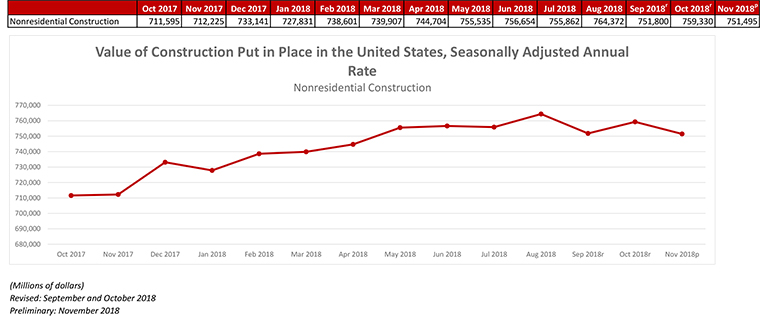
For the non-residential sector side, the volume of commercial work is expected to drop 3%, with rising vacancy rates in the coming year slightly dampening construction, says Murray, who provided the 2019 market update in National Harbor, Md., on Oct. 25.
Retail construction continues to decline, largely due to the shift to online shopping, while hotel construction will slow following a 10% boost in 2018. Office and manufacturing buildings, however, will see small increases, at 1% and 2%, respectively. Institutional building, such as educational and healthcare structures, will rise 3%.


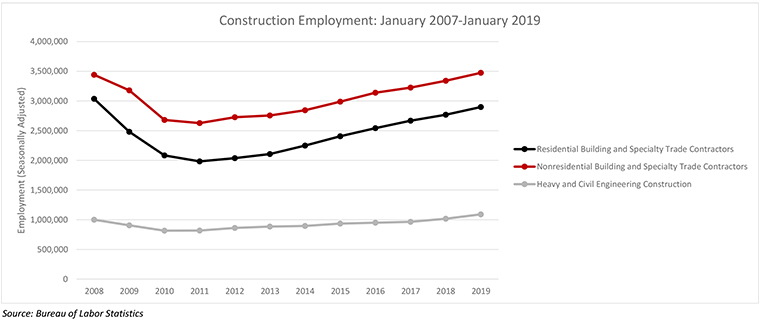
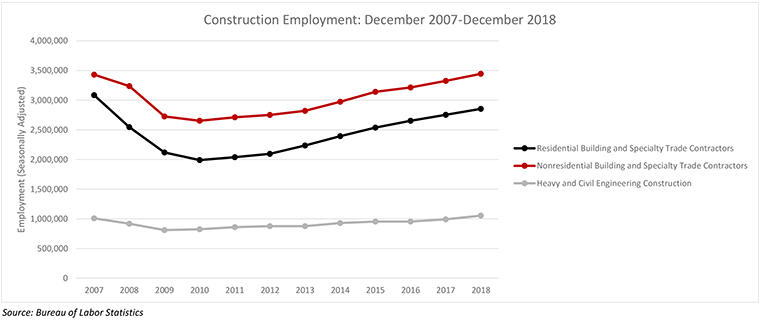
A 2017 study from the Georgetown University Center on Education and the Workforce found between 1991-2015: “Good jobs in non-manufacturing blue-collar industries, such as construction and transportation, increased in 38 states. North Dakota, South Dakota, and Utah experienced the most robust job growth in non-manufacturing blue collar industries, as well as in the total number of blue-collar jobs.”


A few years ago, a group of business and tradespeople in a small but growing midwestern U.S. town needed a bigger firehouse. They understood from personal experience how the world works, but because of pressure from the town they opened the project to all bidders and didn't use a prequalification process. The low bidder, $at 2.5 million, was a contractor with a reputation for being difficult to do business with. The business and tradespeople suspected the contractor was not qualified, but they had not required any prequalification process to screen bidders.